- Family & Friends Getaways When the City Is Busy During Ganesh Chaturthi Celebrations
- A Complete 2-Day Kundalika Experience: Rafting, Rope Activities and Riverside Stay
- 2 Days in Ponda During Monsoon: Waterfalls, Spice Plantations, Adventure and a Forest Stay
- Kundalika Rafting Age, Weight, and Fitness Guide
- Chilla Vs Central Rishikesh: Where Should Families and Nature travellers Stay?
- Vikramgad Monsoon Travel Guide: Forest Stays, Warli Culture and Outdoor Experiences Near Mumbai
- Mumbai to Nature Trails Kundalika: Best Monsoon Route, Travel Time and 2-Night Plan
- Nature and the Ganges: A Wellness Spiritual Weekend in Rishikesh
- Best Time to Visit Hampi: Is July the Perfect Month for Your Trip
- Adventure Resort in South Goa for Families, Friends and Corporate Teams
- Hampi For A Family Getaway in Monsoon? An Ancient Heritage and Adventure Journey
- South Goa in Monsoon: Discover Waterfalls, Forest Trails and Nature Adventures Beyond the Beaches
- Monsoon Magic in Rishikesh: Things To Explore Safely During Rainy Season
- Perfect 2 Day Kolad Adventure Itinerary from Mumbai and Pune
- Looking for a Stay in Kolad for River Rafting: Resort, Camp or Day Trip?
- Planning a Corporate Monsoon Offsite Near Mumbai: One-Day Outing vs Overnight Resort Retreat
- Kolad River Rafting in Monsoon: Travel, Safety and Stay Guide
- Pet-Friendly Monsoon Resort Near Mumbai, Nashik and Surat for a Nature Escape
- Monsoon Adventure Resort Near Mumbai: Waterfalls, Forest Trails and Adventure Activities at Durshet
- Two-Day Sajan Getaway Near Mumbai: Tree House Stay, Kayaking and Forest Adventure Quick Guide
- Durshet, Karjat or Lonavala? Comparing Family Monsoon Getaways Near Mumbai
- Tree House or Resort Room? Choosing the Best Family Stay Near Mumbai for Your Weekend Getaway
- Top Resort Near Vikramgad for Monsoon Escapes and Weekend Trips
- Kundalika River Rafting in Kolad During Monsoon: Complete Guide
- Sajan Tree House Stay Near Mumbai: Why Families Love Sajan
- Best Monsoon Resorts Near Mumbai for Families
- Best Resort Near Vikramgad for Monsoon Weekend Trips
- Family Weekend Getaways Near Mumbai During Monsoon
- Best Adventure Resort Near Mumbai for Families
- Things to Do in Kolad During Monsoon
- Tree House Stay Near Mumbai: Why Families Love Sajan
- River Rafting in Kolad During Monsoon: Complete Guide
- Some Journeys Slow You Down
- Most People Have Only Seen One Version of Goa
- Warli Art, Tribal Culture & Forest Stays Near Palghar An Offbeat Weekend at Nature Trails Sajan
- Monsoon in Rishikesh Does Not Have to Be Intimidating
- Corporate Team Outing Near Mumbai with River Activities
- Best Resort Near Vikramgad for a One-Day Picnic from Mumbai
- The Trip You Keep Meaning to Take
- Summer Camp for Kids Near Mumbai — Outdoor Learning and Adventure at Nature Trails Sajan, Vikramgad
- Best Weekend Resort Near Kolad with River Views and Rafting
- What Happens When You Disconnect for a Weekend
- Hampi Beyond the Ruins Outdoor Experiences Most Travellers Miss
- Why Guided Outdoor Experiences Feel Safer and More Memorable
- Treetop Stays, Bonfires & Slow Mornings Why Sajan Feels Different
- What Makes a Great Corporate Offsite Today — Hint: It Is Not a Conference Room
- A Different Side of Goa: Trails, Forests, Rivers & Outdoor Escapes
- Why Kids Remember Outdoor Weekends More Than Resort Vacations
- First-Time River Rafting Guide for Families
- Why Families Are Choosing Outdoor Retreats Over Traditional Resorts
- Best Budget Friendly Resort Near Hampi for Backpackers
- Outdoor School Trip Destination Near Mumbai for Students
- Hampi with Kids Family-Friendly Things to Do
- Weekend Getaway from Bangalore to South Goa
- Adventure Stay Near Imagicaa Khopoli
- Solo Travel in Rishikesh
- Best Resort Near Ponda Goa for Couples Looking for Quiet Over Crowds
- Best Resort Near Rishikesh for a Summer Retreat
- Best Summer Resort Near Mumbai and Pune with Pool and Outdoor Activities
- Best Resort in Kolad Near River Rafting for Family and Weekend Stays
- Best Nature Resorts in Ponda Goa for a Peaceful and Scenic Stay
- Best Nature Resorts Near Rishikesh with Easy Access to the Ganga
- Best River View & Adventure Resorts in South Goa
- Best Adventure Resorts Near Hampi with Activities for All Ages
- Best Resort in Wada Palghar for One Day Picnic Near Mumbai
- Best Resorts & Hotels Near Rajaji National Park and Laxman Jhula Rishikesh
- Best Resort Near Karjat for Weekend Getaways from Pune and Mumbai
- Resorts Near Rishikesh with Swimming Pool & Balcony Rooms
- Best Resorts in Hampi for Couples: Romantic Stays Near Hampi
- Best Jungle and Forest Resorts in South Goa for a Unique Nature Escape
- Best Hotels Near Kolad River Rafting for Family and Budget Stays
- Best Resorts for Corporate Picnic and Team Outing Near Mumbai & Surat
- Best Adventure Resorts Near Pune for Weekend Getaways with Family and Friends
- Bungee Jumping Rishikesh Guide: India’s Most Thrilling Adventure Experience
- Cycling in Hampi: The Best Way to Explore the Ruins
- Delhi to Rishikesh Road Trip: One of North India’s Most Scenic Drives
- Anegundi Village Guide: The Quiet Cultural Side of Hampi
- Ganga Aarti Rishikesh Experience: What It Really Feels Like to Witness It
- Spice Plantation Tour in Goa: Discover a Different Side of the State
- Bangalore to Hampi Road Trip
- Dudhsagar Waterfall Day Trip: How to Visit from Goa
- Matanga Hill Sunrise Guide: Why This Hike Is the Most Magical Moment in Hampi
- North Goa vs South Goa: Which One Should You Choose for Your Trip
- Monsoon Resort Near Mumbai: Why Durshet Is the Perfect Rainy Season Escape
- Coracle Ride in Hampi: A Simple Boat Ride That Becomes a Travel Memory
- Couples Resort Near Pune: A Romantic Nature Escape at Durshet
- River Rafting in Kolad: Beginner’s Guide to Kundalika River Adventure
- Treehouse Stay Near Mumbai: Unique Nature Escapes
- Offbeat Hampi: 7 Hidden Gems Tourists Miss
- 48 Hours in Hampi: Perfect Weekend Itinerary
- Goa in Monsoon: Why It’s the Best Time to Visit
- Family Vacation Goa: Off-the-Beaten-Path Experiences
- Rishikesh in Winter: Ultimate Adventure Season Guide
- Family Rafting in Rishikesh: Safe Routes & Best Operators
- Eco Tourism Goa: Travel Guide 2026
- Beyond Beaches: 10 Adventure Activities in South Goa
- Yoga + Adventure: The Perfect Rishikesh Retreat Combo
- Rishikesh Beyond Yoga: Adventure Capital of India
- Rock Climbing in Hampi: Beginner’s Guide to Boulder Paradise
- Travel Guide: UNESCO Heritage Meets Adventure
- Hampi Beyond the Ruins: Nature, Silence, and Slow Travel Experiences
- Winter in Hampi: Best Time to Visit, Things to Do, and Where to Stay
- Things to Do Around Hampi for a Relaxed and Unhurried Holiday
- Why Staying Near Hampi’s Rock Hills Makes Your Trip More Peaceful
- A Quick Travel Guide to Hampi: Best Places to Visit and Explore
- Pet-Friendly Forest Getaways: Exploring Nature Trails Sajan with Your Furry Friend
- A Beginner’s Guide to Exploring Sajan’s Forest Trails and Adventure Zones
- Why Kundalika Is More Than Rafting: Nature, Silence & Offbeat Experiences
- Beyond the Rapids: Exploring Kundalika’s Serene Nature Trails and Wildlife
- Top Family-Friendly Forest Treks & Adventure Activities at Nature Trails Durshet
- Why Winter is the Perfect Time for Outdoor Nature Walks at Durshet
- Family-Friendly Nature Experiences Around Chilla, Rishikesh
- Riverside Stays vs City Hotels in Rishikesh
- Best Time to Visit Rishikesh for Nature Lovers
- Why Rishikesh Is Ideal for a Digital Detox & Wellness Escape
- Slow Travel in Rishikesh: A Nature-First Stay Near Rajaji National Park
- Forest Stays vs Beach Resorts in Goa
- Planning a Family Nature Holiday in South Goa Away from Beaches
- How Nature Trails Riverview Rock Valley Goa Redefines Sustainable Travel in the Western Ghats
- Wildlife, Waterfalls & Forest Trails Near Ponda, Goa
- Best Time to Visit Nature Trails Riverview Rock Valley Goa
- Planning a Corporate Offsite or Group Retreat in South Goa
- Things to Do Nearby While Staying at Nature Trails Rock Valley Resort, Goa
- Why Nature Trails Riverview Rock Valley Goa Is the Perfect Eco-Resort Away from Crowded Beaches
- Top Adventure Activities at Nature Trails Riverview Rock Valley Goa
- Explore the Western Ghats: A Nature Stay Experience at Nature Trails Riverview Rock Valley Goa
- Planning a Relaxing Weekend Getaway to Rishikesh
- A Quick Guide to Staying Near Rajaji National Park in Rishikesh
- Why Nature Trails Chilla Rishikesh Is Ideal for Corporate Offsites in Rishikesh
- Things to Do Near Nature Trails Chilla Rishikesh | Nature, Adventure & Culture
- Best Nature Resort in Rishikesh for a Peaceful Riverside Getaway
- Trade the City Rush for Nature Bliss: Celebrate Christmas & New Year at Nature Trails Sajan
- Bring In This New Year Differently at Nature Trails Kundalika Resort with Kolad Adventure Getaway
- Best New Year Getaway Near Mumbai & Pune | Nature Trails Durshet Resort
- What Makes Winter the Ideal Time for Nature Walks, Campfires & Outdoor Fun
- Winter Solo-Travel Spots Near Mumbai & Pune for Nature Lovers & Adventure Seekers
- Best Couple Adventure Resorts Near Mumbai & Pune for the Perfect Winter Weekend
- Top Forest Adventure Resort Near Mumbai for Winter Holidays with Children
- Top Adventure Resort Near Surat for Safe Outdoor Fun with Kids
- Best Nature Trips Near Surat for Families on a two Day Weekend
- Best Outdoor Activities for Pune Kids To Reduce Screen
- Top Kids-Friendly & Safe Adventure Resorts Near Pune
- Best Nature Resorts Near Navi Mumbai for Quick Family & Friends Escapes
- Best Trekking Trails Near Pune & Mumbai for Beginners and Families
- Why Parents in Mumbai Love Nature Trails Resorts for Screen-Free Family Time
- DINK-Friendly Nature Escapes from Mumbai & Pune Under 4 Hours Drive
- Pet Friendly Getaways Near Nashik & Surat – Escape to Nature Trails Sajan Resort
- Pet Friendly Getaways Near Pune – Escape to Nature Trails Durshet & Nature Trails Kundalika
- Pet Friendly Getaways Near Mumbai | Nature Trails Durshet, Kundalika & Sajan Resorts
- Weekend Getaway with Kids: Safe Family Kayaking at Nature Trails Resorts Near Mumbai, Pune & Surat
- Discover Adventure and Learning at the Best School Picnic Resorts near Khopoli
- Unforgettable Experiences Await: School Picnic Resorts in Palghar
- Adventure Activities at Nature Trails Kundalika Rafting Camp, Kolad
- Adventure Activities at Nature Trails Durshet – Where Nature Meets Thrill
- Adventure Activities at Nature Trails Sajan – The Perfect Escape Near Mumbai & Pune
- Where Paws Meet Adventure: Pet-Friendly Adventure Resorts In Sajan
- Romantic Activities for Couples Near Mumbai, Pune & Surat: Serene Retreats at Nature Trails Resorts
- Perfect Pet-Friendly Resorts Near Mumbai, Pune & Surat: Adventures and Safety at Nature Trails
- Safe Family Adventures With Peace of Mind: A Family Guide to Adventure at Nature Trails Resorts
- Corporate Offsites: Why Winter in Maharashtra is Perfect
- From Diwali to New Year: Celebrate the Festive Season Amidst Nature
- The Ultimate Winter Trekking Spots Near Mumbai, Pune & Surat
- Festive Family Holidays: Kid-Friendly Outdoor Experiences at Nature Trails Resorts
- Why Winter is the Best Time for Adventure Sports at Nature Trails
- Weekend Getaways from Mumbai & Pune for a Different Festive Celebration This Year
- Adventures that Strengthen Family Bonds – Trekking & Teamwork at Nature Trails
- Scenic Forest Bathing for Urban Stress Relief – Why Nature Trails is the Perfect Escape
- Scenic Drives from Mumbai & Pune: Monsoon Road Trips That Feed the Soul
- Thrill Meets Tranquillity Near Mumbai & Pune
- Rural Immersion Near Mumbai: A Soulful Return To Village Life
- Waterfalls, Forests & Adventure Escapes In Maharashtra
- Birdwatching Bliss: Discover Hidden Birdwatching Wonders in Maharashtra
- Romantic Escapes Near Mumbai & Pune: Where Love Meets Lush Greenery
- Sizzle of the Pan: Evening Campfires with Maharashtrian Tapri Snacks
- Rain-Kissed Recipes: Traditional Maharashtrian Dishes You Must Try This Monsoon
- Vada Pav with a View: Maharashtra’s Favourite Snack, Reimagined in the Wild
- From Farm to Frying Pan: Monsoon Snacks Made Fresh in Rural Maharashtra
- Chai & Bhajiya Trails: The Monsoon Combo Every Mumbaikar Swears By
- Beyond Imagicaa: 10+ Tourist Attractions & Nature Escapes Near Khopoli
- STEM in the Wild: Outdoor Science Adventures with Nature Trails
- Building Tomorrow’s Leaders: Leadership Skills Through Outdoor Challenges
- Eco-Warriors in Training: Instilling Environmental Awareness Through Experience
- From Campfires to Confidence: Personal Growth in the Great Outdoors
- Warli & Wellness: Rural Art Meets Inner Peace
- Digital Detox: Reconnect with Nature at Durshet
- Explore the Rich History of Maratha Forts in Vikramgad
- Kayaking Through Kundalika: Maharashtra’s Refreshing Water Adventure
- Nature Walks and Wellness: Reconnect with Yourself in Durshet
- Beyond the Rapids: Exploring Kundalika’s Serene Trails
- Elevated Living: The Tree Top Experience at Nature Trails Sajan
- Weekend Getaway: Rejuvenate at Durshet’s Nature Resorts
- Sajan: Where Nature and Tribal Heritage Thrive Together
- Monsoon Magic in Durshet: Trails, Rain, and a Raw Kind of Getaway
- Cultural Immersion: Exploring Tribal Heritage in Sajan, Maharashtra
- Where the River Slows Down, the Soul Follows: Fishing Along the Kundalika River
- Whispers of the Western Ghats: Durshet’s Hidden Forest Trails
- Family Bonding Amidst Nature: Top Activities in Durshet
- Monsoon Escapes: Experience the Magic of Kundalika
- Beyond the Classroom: How Nature Trails Transforms Learning into Adventure
- Monsoon Escapes Near Mumbai & Pune: Where Green Heals and the Rain Sings
- Weekend Getaways Near Pune in Summer with Swimming Pools and Outdoor Fun
- Summer Holiday Packages from Mumbai & Pune with Kids’ Activities
- Cultural Immersion: Traditional Experiences in Maharashtra's Rural Villages
- Exploring Local Cuisine at Nature Trails Resorts
- Detox Weekends: Rejuvenating Nature Escapes Near Mumbai
- Mindfulness Walks
- Yoga Retreats in Nature
- Forest Bathing
- Multi-Generational Travel
- Organizing the Perfect Group Camping Trip
- Capturing Nature's Beauty
- Sunset Seekers
- Macro Photography Guide
- Time-Lapse Tips
- Team Building in Nature
- Family-Friendly Nature Trails
- Leave No Trace: Eco-Friendly Hiking Tips
- Green Getaways: Eco-Friendly Accommodations at Nature Trails Resorts
- Conservation Efforts: Protecting Maharashtra's Biodiversity
- Sustainable Travel: How Nature Trails is Promoting Responsible Tourism
- Hidden Gems Near Mumbai: 10 Unexplored Nature Trails
- Best Hiking Routes in Maharashtra for Beginners
- Top 5 Waterfalls to Visit Near Pune During the Monsoon
- Birdwatching Paradise: A Guide to Sajan's Diverse Avian Life
- Monsoon Magic : Best Nature Trails to Explore During the Rainy Season
- Summer Escapes: Coolest Nature Retreats Near Mumbai and Pune
- Top Adventure Activities for Educational Institutions to Build Team Spirit
- Why School Picnics in Nature Are the Perfect Break from Classroom Learning
- The Best Choice for Corporate Outings Near Mumbai and Pune
- Top 5 Must-Try Activities at Sterling Nature Trails
- 5 Adventure Activities to Try During Your Day Picnic at Sterling Nature Trails
- Day Picnic Ideas for Families, Couples, and Corporates
- Weekend getaways Trips ,Travel Near Mumbai & Pune at Nature Trails
- Connect with Nature: Discovering Serenity at Nature Trails
- Beat the Heat: Exploring Thrilling River Activities on Kundalika
- Make the Most of Your Blissful Retreat with Nature Trails
- Nature and Adventure Combined: Resorts Near Mumbai Perfect for Outdoor Lovers
- Capture and Cherish: A Day Trip to the Stunning Pune Resort
- River Rafting for Team Building at Nature Trails
- Top Midweek Getaways Near Mumbai for a Quick Escape
- Why Workation is the New Trend: Find the Best Resorts near Mumbai and Pune
- Sustainable Travel Guide: Best Eco-Friendly Resorts Near Pune for Monsoon Retreats
- Best Family-Friendly Weekend Destinations Near Pune and Mumbai
- Nature Trails: Best Eco-Friendly Retreats Near Mumbai
- Exploring the Best Kayaking Spots in Maharashtra: A Guide for Adventure Enthusiasts
- Top 5 Must-Try Activities near Mumbai and Pune
- River Rafting Safety Tips to Ensure a Fun and Secure Experience in Pune
- Building Leadership Skills through Nature Trails Programmes
- Empowering Students Through Environmental Awareness Programmes
- The Benefits of Educational Field Trips for Students of all ages
- Outdoor Learning: A Game-Changer for School and College Education
- Corporate Training Programmes with a Twist Amidst Nature
- Boost Employee Engagement with Nature Trails' Corporate Programmes
- Family Fun Day:Kid-Friendly Day Outing Places Near Mumbai & Pune
- Rebalance Amidst Nature: Top Picnic spots near Pune and Mumbai
- Weekend Getaways for Couples and Family near Mumbai, Pune
- 10 Fun-Filled Activities for Families with Kids Under 10
- Perfect family escapes to enjoy with your little ones
- Seasonal escapes: Each season has something special for you
- Growing & Developing with Nature - Perfect Summer Camp Activity
- Maharashtra's Water Activities Adventure Escapes
- Give Your Team a Breather: Perfect Corporate Outing near Mumbai & Pune
- Wild Wanderlust: Exploring Nature Trails in Mumbai & Pune
- Trailblazing Adventures: Mumbai & Pune Nature Trails
- Explore & Return: One Day Trips Mumbai & Pune
- Adventure & Relaxation: Resorts Near Imagica Khopoli
- Thrilling Rapids: River Rafting in Maharashtra
- Create Magical Moments with Your Family at Nature Trails
- Enjoy Picnics with a View at Nature Trails
- Cherish Romance amidst Serenity at Nature Trails
- Rediscover Balance: Top 10 Nature Trails for Soulful Journeys
- Best Family Weekend Trips from Mumbai and Pune
- Strategic Retreats: Choosing the Perfect Corporate Outing Resort
- Adventure Awaits: Exploring School Trips Together
- Perfect One-Day Picnic Getaways near Mumbai and Pune
- Thrills on the Rapids: Unveiling the Best River Activities Spots
- Exploring Khopoli: History, Heritage, Adventure
- Embark on Thrilling Team Outings with Nature Trails Resorts
- Exploring Sajan in Vikramgad with Nature Trails
- A Beginner's Guide to Exploring Nature Trails: Where to Start
- Nature Trails Resorts: Top adventure resort near Mumbai and Pune
- Autumn Adventures: Exploring Maharashtra's Changing Landscapes
There are places that produce a specific effect on the people who visit them. Not excitement exactly, and not the satisfaction of having ticked off a list. Something quieter. A kind of recalibration where the speed at which you have been moving through the weeks suddenly feels absurd.
Hampi does this to most people who arrive with enough time to let it work. The boulder landscape is so vast and so ancient, so obviously indifferent to any timetable, that the urgency you carried in from the highway evaporates somewhere between the first ruin and the second. You start walking more slowly. You start looking at things more carefully. The phone goes into the bag.
During the monsoon, this effect is even stronger. The ruins in the rain are a different set of ruins entirely.
What Hampi Looks Like When It Rains
Most photographs of Hampi show the boulders and temples in the dry heat of October through February. The granite is pale orange, the sky is bright blue, and the landscape is dramatic in a way that reads clearly in a photograph. That version of Hampi is real and it deserves the reputation it has.
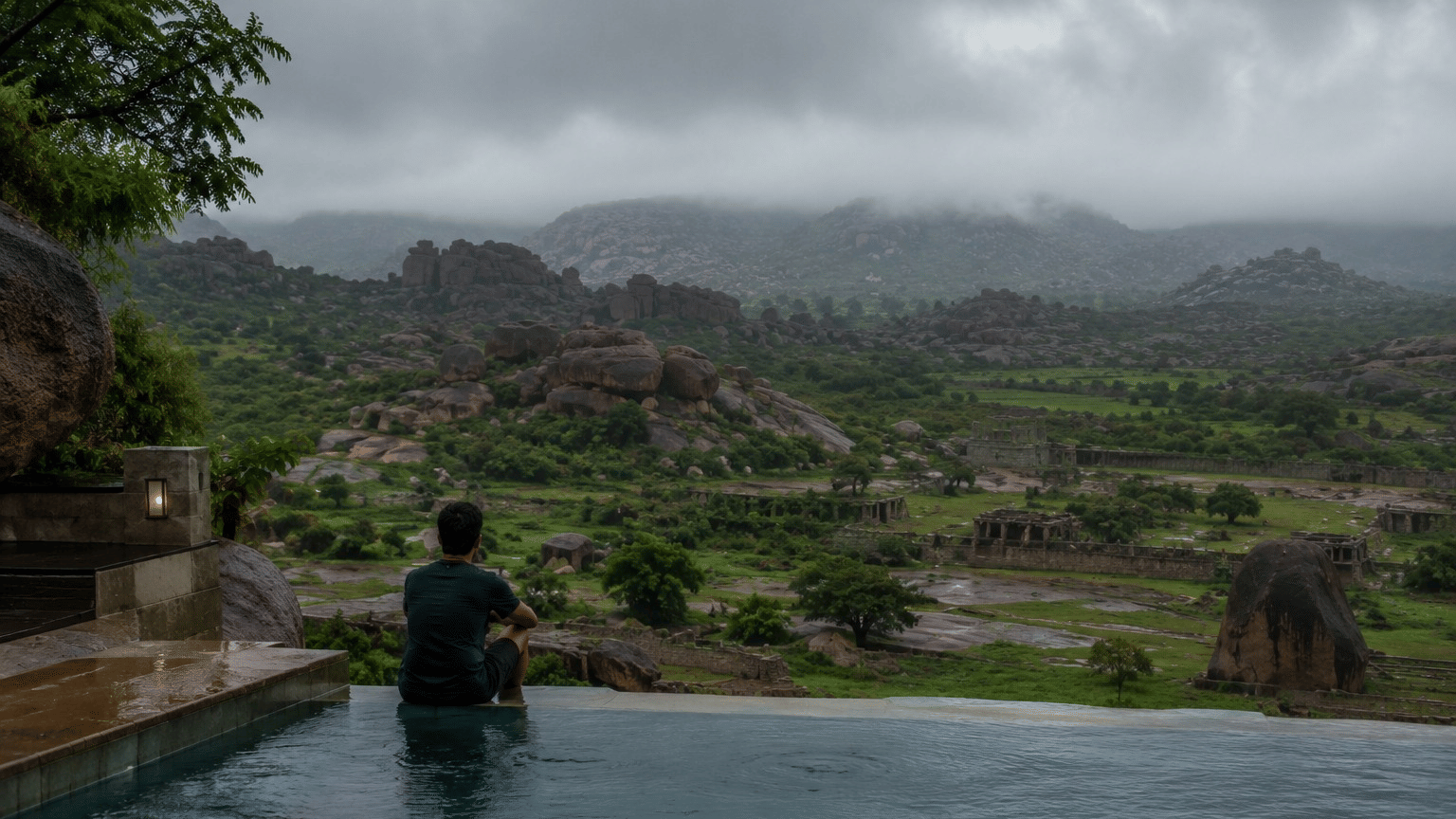
The monsoon version is less photographed and in some ways more itself. When the rain comes, the boulders darken. The patches of earth between the rocks turn a vivid green that does not exist in the dry months. The Tungabhadra fills and the sound it makes at the ghats changes in quality. The temples and monuments are emptier than they are in peak season, which changes the experience of standing inside them in ways that are difficult to describe and very easy to feel.
The light in monsoon Hampi is not the hard southern sun of summer. It is softer, shifting, and it does something interesting to stone that has been sitting in a landscape for five hundred years. You understand, in that light, why people thought this place was extraordinary. Not because the history books tell you so but because the place itself demonstrates it.
The Resort That Was Built for This Kind of Travel
Nature Trails Ashoka Resort sits at Sangapur on the Anegundi-Gangavathi Road, set against the edge of Hampi's iconic rock hills. The property is designed around the philosophy of slow and immersive travel, which is not marketing language in this case but an accurate description of what the experience produces.
The accommodation options include Superior Rooms with hill views, Classic Rooms with garden views, eco-friendly Bamboo Cottage Rooms, and dormitory options for group travellers. The bamboo cottages specifically are worth mentioning in the monsoon context because waking up in a bamboo structure when it is raining outside creates a quality of shelter that a concrete room does not replicate. The sound, the smell, the light through the weave are all part of the morning.
The hillside swimming pool, which the resort describes as one of the longest in the region, looks out over the surrounding hills and valleys. During the monsoon, that view changes daily as cloud formations move through the landscape and the hills turn progressively greener through the season. It is the kind of pool view where you intend to swim twenty lengths and end up sitting on the edge for an hour instead.
What the Days Actually Look Like
A monsoon stay at Hampi built around the resort as a base tends to find its own rhythm after the first day. The morning is the time for the ruins. The light is at its most interesting, the site is at its emptiest, and the temperature is manageable in the rain rather than demanding in the dry heat.
The heritage walks that the resort organises cover the UNESCO monuments, Anjanadri Hill, ancient temples and forts, and the village at Anegundi which sits across the river and operates as a working settlement built on a landscape that has been continuously inhabited for centuries. The coracle crossing that takes you there is itself an experience that belongs to Hampi specifically.
The spice plantation visits nearby and the nature walks through the terrain around the resort are available through the season. Afternoons work well at the pool or in the gardens when a monsoon afternoon settles into the steady rain that discourages movement and rewards sitting still with a book. Evenings at the resort carry the particular quality that this landscape produces when the light is going and the hills are losing their definition against the sky.
Why the Monsoon Specifically Is Worth Planning For
Hampi in December through February is excellent and fully deserved of its reputation as one of the best heritage travel experiences in India. But the monsoon visit produces something that the peak season does not.
The crowds drop significantly. The landscape transforms. The ancient stones take on a character in the rain that is more moving than their dry-season version. And the combination of genuine solitude at a UNESCO World Heritage site and a resort designed specifically around slow immersive travel means the trip does what travel is supposed to do. It changes the speed at which you are moving through the world.
That is harder to find than it sounds. And it is exactly what Hampi in the monsoon offers.
Guest Review:
"Excellent service, very helpful staff, delicious food, awesome ambience. A place one must visit. Peaceful and calm within nature. Well done team, we enjoyed our stay to the fullest."
"A peaceful nature-infused getaway. The rooms are well-appointed and the bamboo huts amid the verdant gardens are ideal for anyone seeking both relaxation and cultural discovery. The access to Hampi's heritage sites from the resort is excellent and the staff ensured the stay is completely hassle-free."
Planning a Monsoon Trip to Hampi?
Visit: https://www.naturetrails.in/ashoka-resort-hampi/
Call:+91 79 6926 9807
Email: hampi@naturetrails.in
Book directly for best rates and monsoon availability.
Frequently Asked Questions
1.Is the monsoon a good time to visit Hampi?
Yes. The ruins are quieter, the landscape is dramatically green, and the ancient stone takes on a character in the rain that the dry season does not produce.
2. How far are the main Hampi monuments from Nature Trails Ashoka Resort?
The resort is located at Sangapur on the Anegundi-Gangavathi Road with easy access to the UNESCO heritage zone, Anjanadri Hill, and the Anegundi village across the river.
3. What accommodation is available at Nature Trails Ashoka Resort Hampi?
Superior Rooms with hill views, Classic Rooms with garden views, eco-friendly Bamboo Cottage Rooms, and dormitory options for group travellers.
4. Are guided heritage walks available during the monsoon season?
Yes, curated walks covering UNESCO monuments, Anjanadri Hill, temples, forts, and the Anegundi village are available through the season.
5. What is the hillside pool at Nature Trails Ashoka Resort like?
One of the longest pools in the region, it overlooks the surrounding hills and valleys with views that change daily during the monsoon as clouds and rain move through the landscape.
6. Is Hampi less crowded during the monsoon?
Yes, the peak season crowd thins significantly during July through September, making monument visits quieter and more personal.
7. What food is available at Nature Trails Ashoka Resort during a monsoon stay?
Multi-cuisine dining at the eco-friendly restaurant covers Indian, regional, and Chinese options with poolside and open-air meal settings available.
8. Is the coracle crossing to Anegundi available during the monsoon?
Availability depends on river conditions. The resort team advises on crossing timing based on daily conditions during the stay.
9. How far is the nearest airport from Nature Trails Ashoka Resort Hampi?
Jindal Vijayanagar Airport at Toranagallu is approximately 45 km from the resort, around an hour's drive.
10. How do I book a monsoon stay at Nature Trails Ashoka Resort Hampi?
Visit https://www.naturetrails.in/ashoka-resort-hampi/, call +91 79 6926 9807, or email hampi@naturetrails.in.